ob and I went to the zoo in Toronto, Ontario. It’s massive. Have you considered a zoo project? Create your own! Use A Home for Everyone as inspiration. The Toronto Zoo has free resources. What about designing a scavenger hunt? The Smithsonian Zoo has a list of Webinars, with activities. Have you ever wanted to sketch at the zoo? Practice at home with these tutorials. Add some math with Design Your Own Zoo. Write a Zoo Animal Report. This version of a report is more challenging. Here is a packet, African Animals, with a map to identify habitats in Africa. Here is Where Animals Live, with more map activities. Borrow an armload of Zoo books from the library. A trip to the zoo is an expensive treat. Make your visit the culmination of your project. Don’t forget to document your project and visit as part of your school portfolio!
Wednesday, August 7, 2024
Sunday, August 4, 2024
Visit a Museum!
Rob and I are in Corning, NY, visiting the Corning Museum of Glass (CMOG) and the Rockwell Museum. (BTW, the Rockwell Museum is NOT Norman Rockwell. Instead a local couple shared their American collection. The combination ticket was about $5 more.). CMOG has educational materials worth a look. There were loads of families visiting CMOG. Our family included many, many historic sites and museums during family trips. I have a few tips.
1. Find free museums. If things are odd or vastly offensive, you just leave. No money wasted. There are 17 Free Smithsonian Museums in Washington, D.C. Most of theses museums are located on the Mall, which is a safe place to visit. Visit the monuments or the White House (a pain!). We park at Union Station and walk to the Mall. It’s three miles between Union Station and the Lincoln Monument. There are subway stations; they aren’t free. Here are all the free museums in Virginia. The Chrysler Museum in Norfolk is a jewel. Even NYC has free museums or free days.
2. Start small and limit the visit. Try a short visit, 30–45 minutes, the first time you visit a museum. Leave before everyone is cranky. I’m serious! When my kids were tiny, we ran through art museums. See if the museum has a scavenger hunt for kids.
3. Try museums based on a child’s interest. We took Paul to the Science Museum of Richmond, which has Rat Basketball and Speed! The National Building Museum is featuring Brick City! (My son, Josh, always wants to visit the exhibit of chairs and couches.) Many botanical gardens have Sean Kennedy’s Nature Pops, with LEGOs.
4. Combine the museum with a trip to the Zoo. Our family has visited many zoos. The Metro Richmond Zoo has a dog who is a cheetah’s companion, Kumbali and Kago. We’re on our way to Toronto and plan to visit the zoo there, too.
5. If the Zoo is too expensive plan a treat after the museum visit. Our family visits the gift shop after our museum tour. However, on family trips, the kids may have one souvenir. The price has to be reasonable. Below are pix from the Corning Glass Mueum.
Wednesday, July 31, 2024
Teach your child how to write a letter!
My husband and I volunteer as Co-op teacher and help with religious education at our church. We led a Faith Camp and wanted to thank our priest for all of his help. Naturally, we had the kids write letters. Many children do not know how to write a letter or how to address an envelope. Rob and I are old-fashioned and mail thank-you notes. Here is a post on letter writing, which includes thank-you letters, complaints, and invitations. Here is an example showing how to address an envelope, which has become another lost art. The first day of Composition class, the kids are writing letters to service members. Operation Gratitude has Letter Writing Instructions. Your Co-op may want to send a care package as a service project. One year, during VBS, a parishioner was deployed to the Middle-East. Claudia was a VBS volunteer. The children wrote letters and drew pictures, which we sent. Claudia showed her letters to everyone! My son, Fr.Josh, is a priest and chaplain in the Air Force, currently assigned to Japan. The kids on base might enjoy some letters. I’m getting excited to teach Composition!
Monday, July 29, 2024
Elementary Readers
Initially, home-school families need to help their child learn to read. Many families make reading their focus in the early primary years. These families mainly do Math and Reading. Once the child can read, English or Language Arts become trickier. I like Kolbe’s Literature manuals. The Primary and Elementary Literature manuals have a book list, reader’s questions, and vocabulary from the books. I had Paul read 20-30 minutes from a book on the list, answer questions, and look up terms in the dictionary. (This was also a means to practice handwriting.)
Let me recommend adding a Basal reader to English, especially for children in grades one through six. A Basal reader is a reading book, full of stories, brief biographies, poems, even songs. This is no longer a popular approach. However, a Basal reader exposes kids to a huge variety of Literature. I put together a list of Basel readers to consider.
1. Kolbe offers Catholic National Reader Books, such as Book Three.
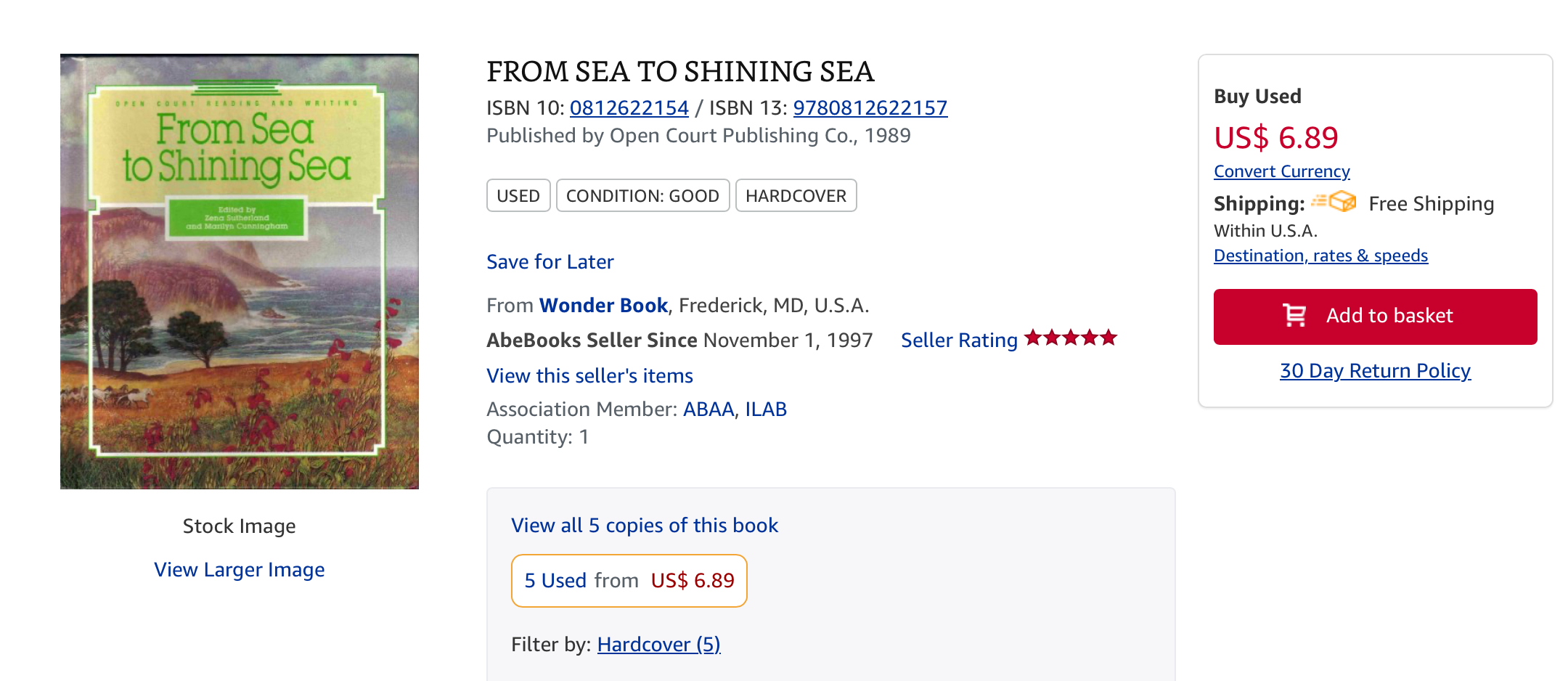
2. Open Court is one of the oldest series of reading books. Let’s Kill Dick and Jane explains how Open Court revolutionized reading. (McGraw Hill has Open Court Reading 2016 and Open Court Reading 2023. I’m not a fan. These are newer programs which cost a fortune and require many, many books, assessments, etc to use properly. I’m not sure I even like the stories!) Here is a testimonial. Scroll down for the titles to books in the Basic Reader, or RISE series, the Headway Reader series, and the third Revised Reader. If you continue to scroll, you can see the table of contents. Old fashioned or not, these readers have The Little Red Hen, The Tale of Peter Rabbit, and Pocahontas and Captain John Smith. Can you tell I love Open Court readers for younger children? These textbooks are harder to find. At the bottom are screenshots with prices.
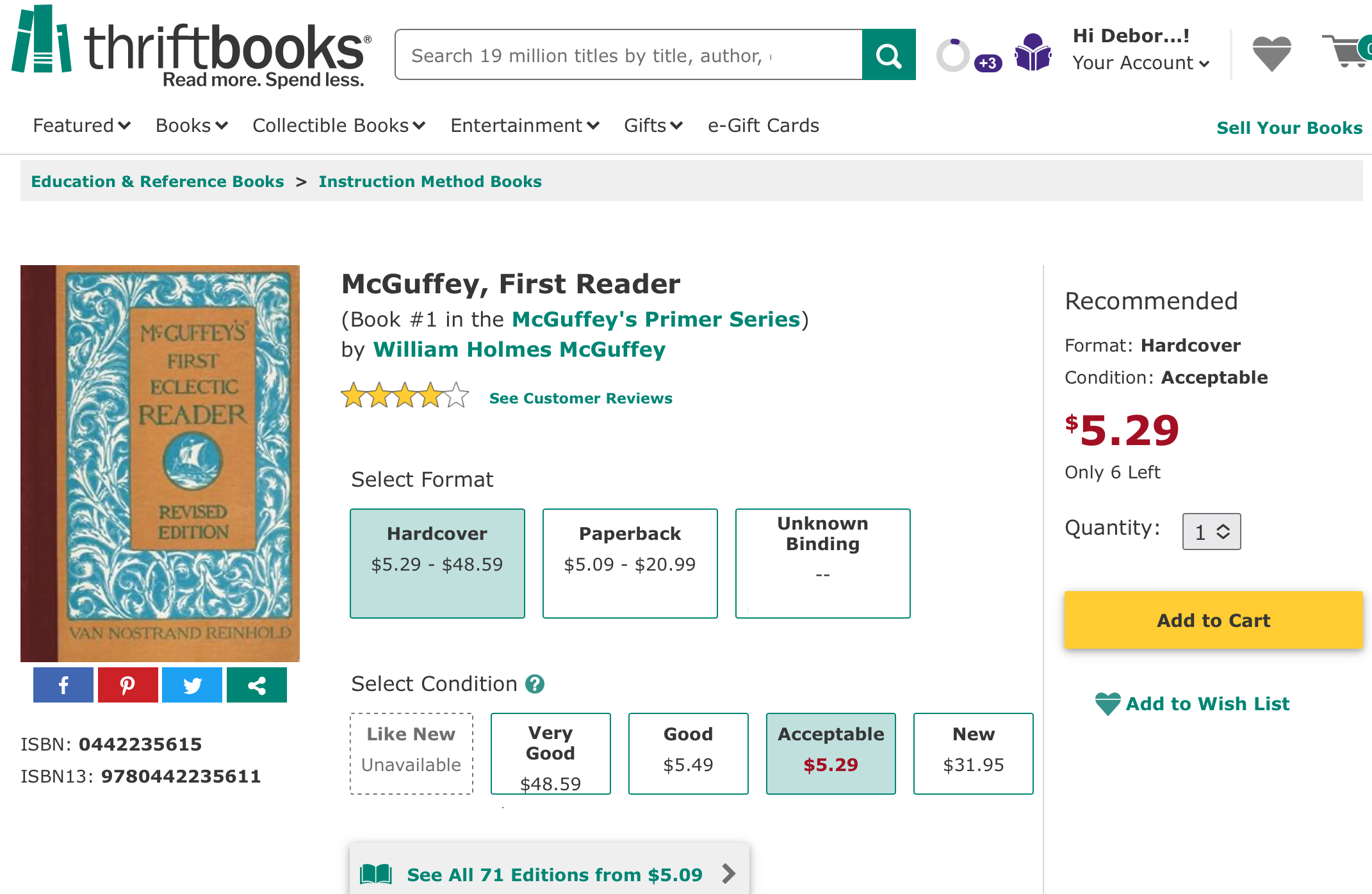
3. I know one family who use McGuffey Readers. Free copies are available on Google Books and The Gutenberg Project. Families use these primers for literature, morality stories, and for copy work—another neglected teaching tool. Have your child copy a passage or do a dictation. Each passage has loads of vocabulary to use for spelling.
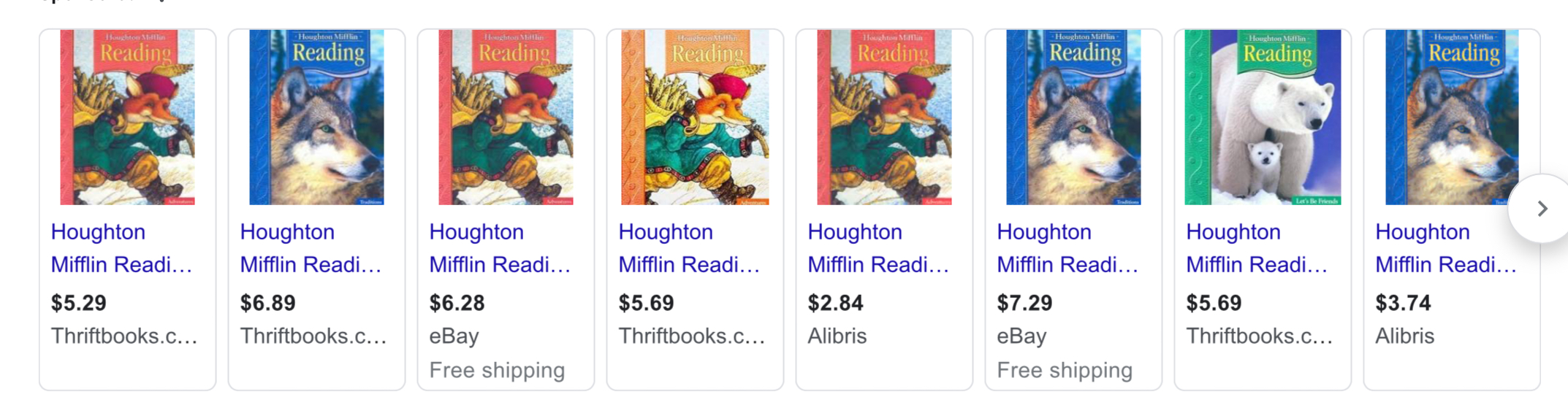
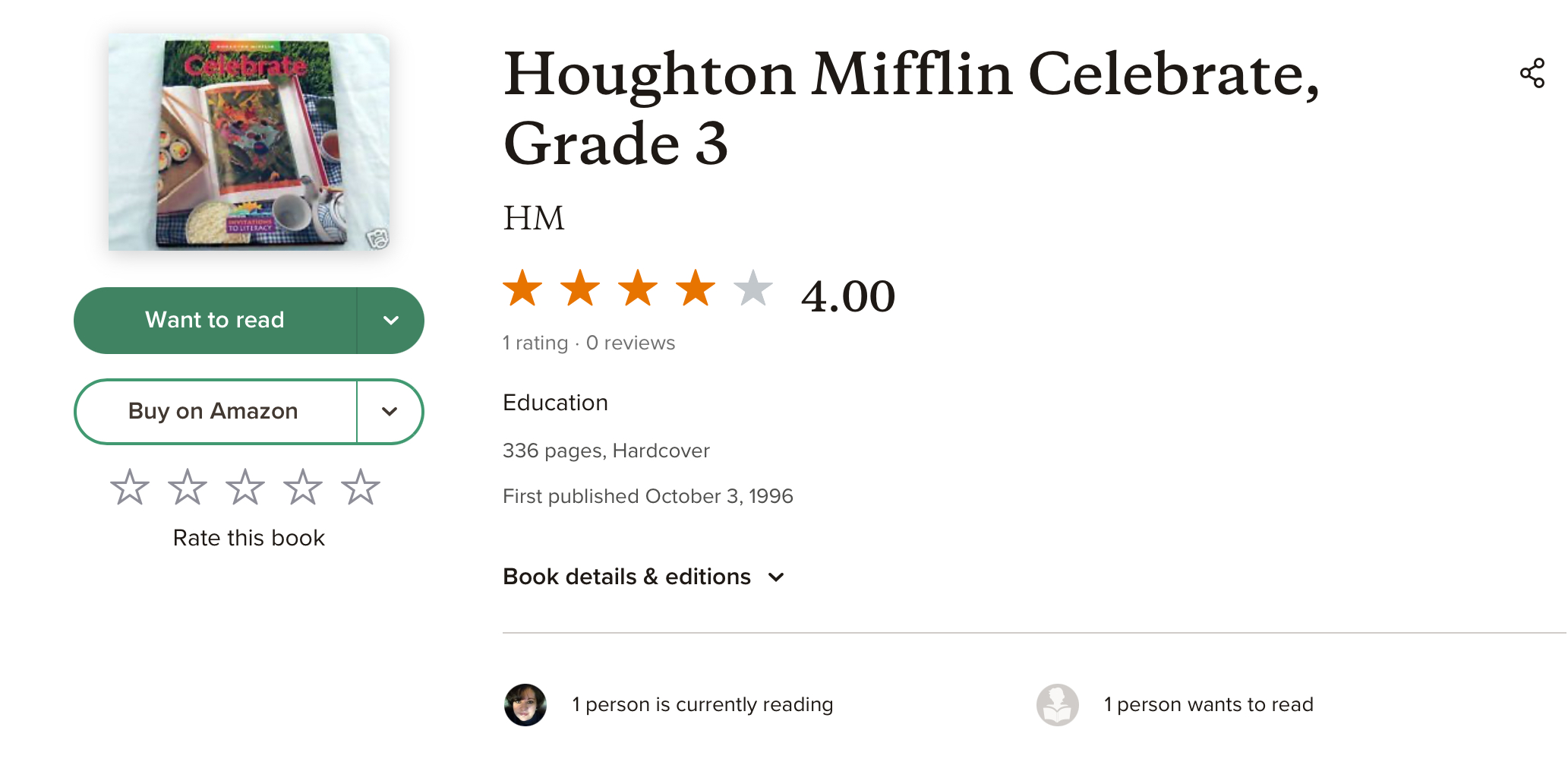
4. I used an older textbook, an anthology, from Houghton Mifflin for Paul. I bought the workbook; however, I mainly used the textbook as reading enrichment. Again, you can do dictionary work, copy work, or simple reports from any story.
Below are several screenshots of the books described above.
Do you need to buy a curriculum or enroll in an online school?
I teach with the local Co-op. Before we relocated to the Quantico area, I taught in West Virginia. Additionally, I worked with a number of home-school families. WV requires all home-school families to have a certified teacher evaluate their portfolios and submit an evaluation letter to the local school board office. Do you need to buy a curriculum? What about enrolling in an online school? The short answer is ‘No.’ When COVID struck and schools closed, I ordered a variety of materials for Paul. The following school year when we home-schooled him, I registered with Kolbe Academy. Why? Kolbe offered the syllabus, tests, and support. By submitting materials quarterly, I felt Kolbe held me accountable.
However, you can create a successful curriculum on your own. The families I’ve worked with are split; about half enroll in a program and half go it alone. The more experienced home-school families are less apt to rely on an online school or curriculum. They already have loads of books and equipment. They have vetted programs and know what works with their children.
One family started with a question, ‘What is important for my child to learn? Then the mom set out her program. Do you have a college degree? If you don’t, you are going to feel more confident working with an online school. See if your region has a home-school Convention*.Typically vendors and online schools attend, permitting you to ask questions and look at materials. My friend, Crystal, and I went to a Catholic home-school convention in Virginia to select a school before I home-schooled her step-daughter, Lacie.
Home-schooling is not an ‘all or none’ proposition. My friend, Jen, enrolled her children in Classical Conversations, which meets once per week. I work with her teen son weekly on Latin. Jen uses a wide range of materials for her kids, apart from assignments through Classical Conversations. Many local families use Co-op or online classes for Math and Science; otherwise the teens take classes through an online school. (As a Co-op teacher, I comply with the requirements for their respective schools.)
If you want to design your own curriculum, talk to veteran home-school teachers first. Start with the core, four subjects: Math, English, Science, and History. Join a Co-op. They plan field trips, organize music or art classes, and share resources. Every Co-op is different—especially in terms of its organization and offerings. Co-ops allow you to network. Mention your child is struggling with math and stand back. Moms will swoop in with advice.
I recommend buying textbooks and workbooks, at least at first. The Young Explorers Science Series has a syllabus in the notebook. If you use the textbook and complete the workbook, you’ll have a year-long science class for your elementary-aged child. The Young Explorers series has loads of experiments and projects. They offer two levels of student notebooks for each textbook. The Junior notebooks have printing and handwriting exercises, along with projects. The other workbook has more questions and vocabulary exercises, such as crossword puzzles. The same is true with Saxon Math and the Catholic Textbook Project. Here is an example of the Saxon home study kit. Saxon has 120 lessons, designed for a year-long program. The Catholic Textbook’s History program has a student textbook, teacher’s textbook, and student workbook. They provide tests and quizzes in a pdf file. Again, this is enough material for the whole school year.
English is trickier. Young children need to learn how to read. Once they learn to read, start reading the classics. I like the Primary and Elementary Literature from Kolbe. You can get the books at the library. Download the audiobooks from Hoopla and listen in the car. I copied the questions from the teacher’s manual into a notebook. Paul read 20-30 minutes each day and answered questions. The number of books depends on your child. You can select vocabulary words to use from the books. I had Paul look up words in dictionary and write them into the notebook. You might have your child write answers in cursive. We also used Classical Composition from Memoria Press. Here is a sample.
Faith formation is a given for the home-school families I know. Some enroll in the religious education programs at church; others teach religion at home. (BTW many Catholics use Faith and Life , both home-schooled families and religious education programs.)
Do you need a program? It is easier to home-school by enrolling in an online school. But, you can create your own program, too!
*Here is the link for a Catholic home-school conference, which was online in 2024.
Sunday, July 28, 2024
Themes for Composition: Should you get a tattoo?
I’m teaching Composition again this Fall. The kids in class are all freshmen. I want to do loads of different writing exercises. One of my favorite themes is ‘Should you get a tattoo?’ When I taught in public school, the administration initiated writing exercises in every class. I looked for provocative topics. When I introduced tattoos, the kids wrote volumes. I use Chemmatters: Tattoo Chemistry Goes Skin Deep. We write a list of pros and cons of getting a tattoo. We discuss reasons people get tattoos, such as tributes, heritage, etc. Finally, they write an essay explaining whether or not one should get a tattoo. Recently, there are studies which suggest tattoos may cause lymphoma. Some kids are fiercely opposed, often saying their bodies are temples of God. While I don’t have or want a tattoo, many, many teens do. Try this topic; you’ll have such a rich discussion and powerful essays.
Saturday, July 27, 2024
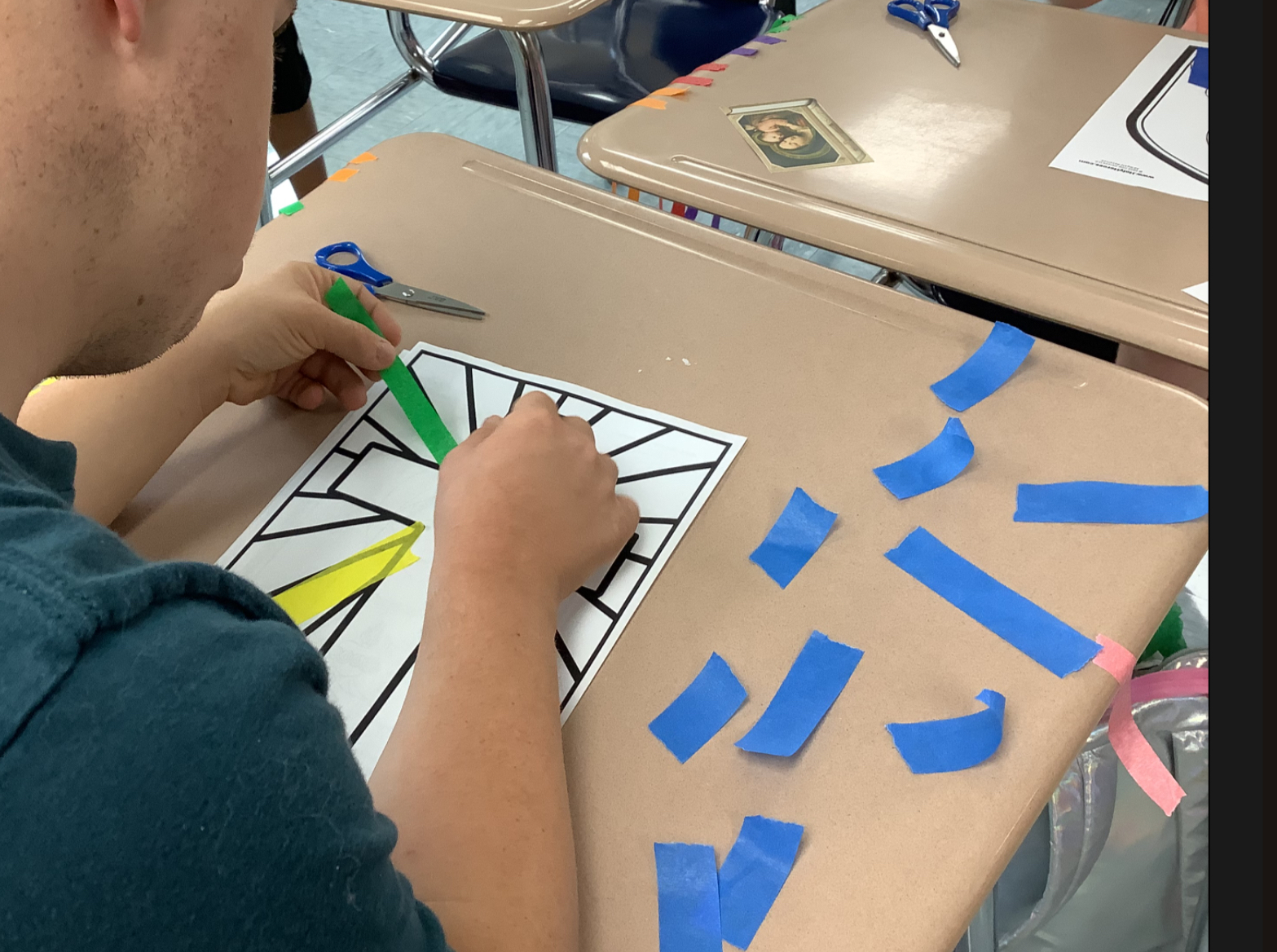
Inspired by Paint by Sticker—Substituted with Painter’s Tape
Have you seen Paint by Sticker? I liked the idea a lot for VBS and Faith Camp. But, I wanted faith based coloring pages. Instead we used colorful painter’s tape with coloring sheets. I bought every color I could find. We ripped off strips of tape for the kids and passed out coloring sheets. It was a hit!