It's summer and we want to encourage our favorite six year old, Paul, to hone this kindergarten skills. We explained that he needed to practice reading and writing a little, often, all summer. Now, before you think this is Drakonian, Paul had breaks for vacation each month. His reading each day was typically twenty or thirty minutes. It helped that he took part in the summer library program and earned prizes. (One prize was his photo on the wall at the library. Cool, right?). We provided painting projects, such as the Star Wars sun catchers. But writing is another story. I didn't even try 'color, cut, and glue'. Over the past two weeks, Paul had several visits with family and adored time with his cousins. So, I suggested he write letters telling them how much fun he had. Paul had to have some help spelling. He's learning phonetically; missed became 'mist' and time became 'tine'. Fine. I provided fine notecards. I gave him options: painting or sketch? We reviewed how to address an envelope and where to place the stamp. Paul is eager to write to all of his cousins and Aunt Gigi. Today, I let him loose with a digital camera. My plan is for him to write letters and enclose hand-made pictures with photos. Paul doesn't realize he's working on hand-writing.
As an update, we've had Paul write several letters, take and print photos, and post the letter packets to his favorite family members. Did he balk? A little. His letters won't win any literary awards; but, he had some practice before resuming school.
Monday, August 29, 2016

Give the kids a camera!
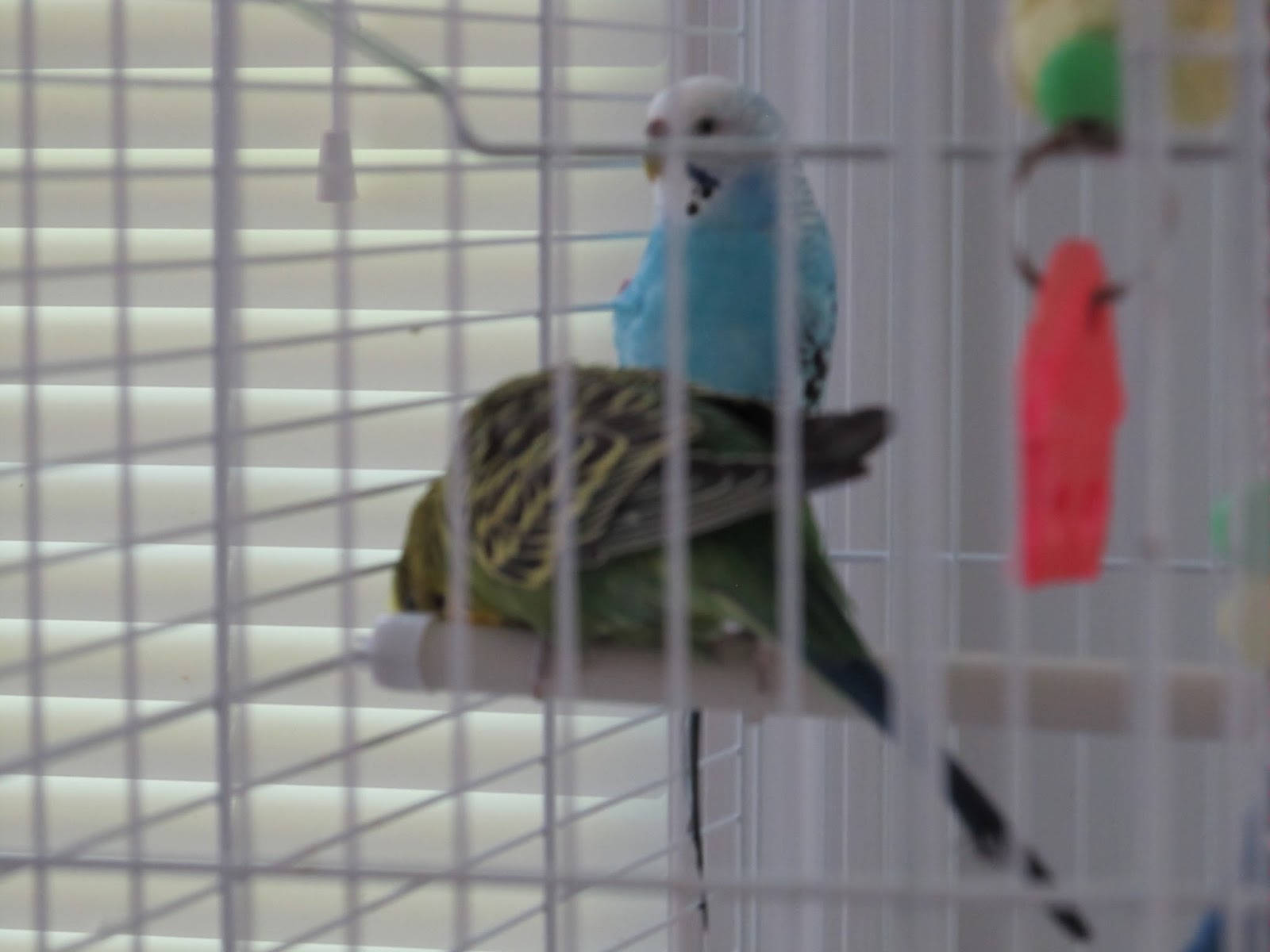
It's the dog days of August and I'm becoming more and more creative planning fun for our favorite six year old, Paul, and his friend, Cassidy. Last week, My dad visited with my twelve year old sister, Savannah. She and Cassidy, ten, were fast friends. The two wanted a camera to take souvenir photos. I have a photo printer; the kids took loads of shots. Cassidy was taking photos this morning and it occurred to me to lend a camera to Paul. I set the digital to 'auto'. Cassidy gave him a few pointers; she is a natural and has an artist's eye. So, get a used digital camera at Good Will or dig up an old one from the closet. (I had two old digital cameras on hand.) Show the kids how to take a few shots. Ours have SD cards. So, I showed both kids how to eject the card from the camera, load it on the laptop, and copy the photos. We attached their photos to emails to send. Here are a few of their pictures.





Saturday, August 27, 2016
Co-op Groups
I moved to a much bigger city with an extremely active Co-op group. But, I can't emphasize enough to how useful Co-op groups are. In my last house, the Co-op, which had maybe thirty members, used a Facebook group to communicate and organize. They were able to message everyone with cancellations, class work questions, or tips. The nice thing is that as Facebook friends, we can see all of one another's posts, something I treasure now that I've moved. The new Co-op group is switching from a Yahoo group to a Google group. The Co-op group is large, spanning two counties, with about one hundred members. Email communication is great because there are many more posts. I can quickly sift through the emails and delete those I find irrelevant. This group posts scores of local opportunities, such as the Lego exhibit at the Botanical gardens about 1 1/2 hours away. I scour the event in the area through a magazine at the library, but wouldn't have known about this exhibit otherwise. Now, this Co-op is organizing two trips for anyone interested in the group. Home-schoolers, take note! Pick a local landmark and schedule a field trip as a group, even if the group consists of two moms and their kids. Don't forget to log field trips, just as you log reading books. Won't your portfolio glitter next year?
Thursday, August 25, 2016
NSTA Review of Amazing Land Animals and Marine Superstars
Hungry Tomato has a new series called 'Animal Bests', authored by John Farndon and illustrated by Cristina Portolano. The two books I reviewed are 'Marine Superstars' and 'Amazing Land Animals'. These two were fun to read. Both books focused on animals' 'amazing abilities' or 'super senses' rather than dubbing them survival strategies. The books in the series are geared toward children in grades 3-6 as nonfiction. The writing is clear and cogent; it's not surprising that Fardon has been short-listed four times for the Royal Society's Young People's Book Prize. 'Marine Superstars' has fascinating facts. I knew some turtle species eat jellyfish; I didn't know blue ocean slugs eat Portuguese Man of Wars (p. 31). My college Zoology would have been much more interesting had I know that sharks play dead (p.20) or that sepia came from cuttlefish ink (p. 21). I love the way Farndon explains symbiosis as 'making allies' (p. 24) and includes a food web (p.27). 'Amazing Land Animals' introduces the book with 'a taste of how amazing land animals lanyard, before we even get to the really clever stuff', and has a few interesting facts to lure children into the book. Teachers could launch their lessons by choosing an animal fact. For instance, (p.9) 'Jumbo Da Vinci' is the title of a paragraph about elephants who paint. Wouldn't children want to jump online to see examples or find out how much their paintings cost? Teachers could tie a math lesson about speed to the cheetah (p.6), which can attain speeds of 121 kilometers per hour. My favorite classroom pet is a rat; 'Amazing Land Animals' has two pages (pp. 20-21) dedicated to facts about rats, including how rats can detect land mines without detonating them. Who knew? The best aspect of both books? It made me want to learn more. Wouldn't a child ask, 'What else can a dolphin or elephant do?' Perfect. The illustrations support the texts well. My favorite is the tiger (p. 30) swimming underwater, making it easy to imagine it snagging a crocodile. Children value scientific accuracy along with interesting facts. These two books deliver. Both 'Amazing Land Animals' and 'Marine Superstars' are exactly the type of books for curious naturalists. My only quibble is the price; at $26.65 for a hardback, few classrooms can afford their own copy. However, libraries should consider buying these books. They'll fly off the shelf. My ten year old neighbor couldn't wait to get her hands on my copies.
Sunday, August 21, 2016
Summer Science Fun!
While visiting family, we did a few, fun, science projects. Since we're in the dog days of summer, here are a few fun projects for elementary aged children. (Teens can help and look up the underlying science principles. See if they can explain the ideas to the little ones.). First up is Flubber; wikihow has three recipes. Use tempera paint instead of food coloring; it's cheaper. What happens when you substitute clear glue for white glue? Can you get the mixture into a bouncy ball? Next are water beads. These expand in water. What happens if you put them in tap water, or salt water, or distilled water? How about soda or vinegar? Ghost crystals are a type of discrepant event using water beads. (If you scroll down the page of this link, Educational Innovations has a lesson for ghost crystals.). Make sidewalk chalk or sidewalk paint. Make the chalk or chalk paint 3D. (The 3D effect is a result of color theory. Warm colors approach and cool colors recede. Try layering warm and cool colors or putting them side by side.). One last idea: Cartesian divers. This one is with a pen cap. Steve Spangler has one with a medicine dropper. Try making a diver using a packet of ketchup. When I'm making Cartesian divers at a camp or with a large group, I use pipets and nuts for ballast, like these materials from Educational Innovations. Here are a few tips for divers. Use a one liter soda bottle or stiff water bottle filled to the brim with cold tap water. Set up a bucket of cold water to test your diver before putting it into your bottle. A good diver will immediately dive down to the bottom and reimerge to the surface with a bobble. Seal the cap tightly and squeeze the sides of the bottle with both hands. A good diver is easy to squeeze to make it dive. Won't the kids have fun?
Wednesday, August 17, 2016
Tools for Fall: Concept Maps
You are probably familiar with Venn diagrams. One tool I like to use is a concept map. I assign vocabulary to introduce a lesson. The student is instructed to create a concept map organizing these terms. Here's the rub; kids need to understand the vocab before they can sort terms into categories. Inspiration has a good explanation here. (Inspiration is a commercial software program that creates concept maps.). IHMC has free software and apps to create digital concept maps. Wikihow has a clear explanation here.
Portfolios
Let's prep for fall. Plan a portfolio. I think a hybrid portfolio is best. What do I mean? When I teach home-school Co-op classes, I recommend student keep a composition book for notes and a folder or binder to hold hand-outs, tests, and references. To me, a portfolio is a composite of a student's best work and includes a variety of work samples: completed labs, written reports, texts, sketches, and summaries. Notes and lab experiments should be maintained in a marble composition notebook, which can be another artifact for the portfolio. Additionally, organize a digital portfolio. I keep a science blog to document most of my science class activities. Student can save links to the blog as evidence for their portfolios. I urge my students to take photos of labs or simulations for their portfolios. When a student completes a concept map or a slideshow, I instruct the kids to save links or screenshots for their digital portfolios. All of these samples can be catalogued to Drive or a wikispace site. Then the family can include a link with work samples, photos, reading logs, etc. for submission in a digital portfolio with hard copy samples. Get on it now! Take tons of photos and start assembling a digital portfolio. Better yet, get kids in the habit and save yourself the world.
Subscribe to:
Posts (Atom)