Our little household does many science projects. What type of projects does your family enjoy? A friend’s family devised a timeline of music which spanned the perimeter of their home classroom. Have you considered Teaching about Famous Artists? (Here is a book!). Several home-school families raise chickens as a project: exotic breeds, organic practices, or as part of 4H projects. Dick Blick has Fiber Art Project Ideas. What about learning how to knit? Make your first family project Team Scarves. Brainstorm ideas as a family: gardens, sheds, woodworking, leather crafts, 4H, Scouts, even an Etsy Business. Here is how I brainstorm. Ask your family, “If money were no object, what would you like to do?” Now, when the kids answer, “Go to Disney World!,” ask them how to pay for the trip. I had a young friend who built and sold Adirondack chairs. He was ten! What projects could your family do?
Saturday, August 15, 2020

Word of the Day
Our little household uses Vocabulary Workshop. These booklets are packed with vocabulary enrichment. Additionally, novels and textbooks bolster vocabulary. You can also use Word of the Day. I taught at two private schools which used WODs from the elementary grades. Another good source of WODs is Script’s Spelling Bee’s Words of Champions. BTW many home-schoolers compete nationally. Want to include a bit more rigor? Take a word, spell it, use it in a sentence, and specify synonyms. Do one a day. Learn a word’s etymology, such as cardiovascular, using an etymology dictionary. See why we also learn Latin?
Thursday, August 13, 2020
Teach your child how to learn!
I teach a teen and a ten year old. My goal is for them to learn how to teach themselves. The teen sets her goals based on a curriculum. With a year under her belt, she is evaluating assignments, estimating time to finish, and allotting time each day to achieve her,goals.
How do we get there? With younger kids, start with a schedule. Get the child in the habit of taking out materials and working on the next assignment. Here’s an example. Paul, ten, is memorizing about 50 elements on the Periodic Table. This week, he is learning 1-36. He writes out the names and studies. We have a system. I add a few more elements each week. Paul studies the Table in the book, closes it, and takes out the blank copy for the test.
Each day, sit down and give your kids the list of tasks for the day. Start with the hardest or least liked subject. We have materials in bins to make it easier to pull out materials. If you assign one page or short assignment for each book, your child should be able to move from task to task independently. Try it! Below is a photo of our bin system. I bought felt bins from Five Below.


Sunday, August 9, 2020
Set up your space!
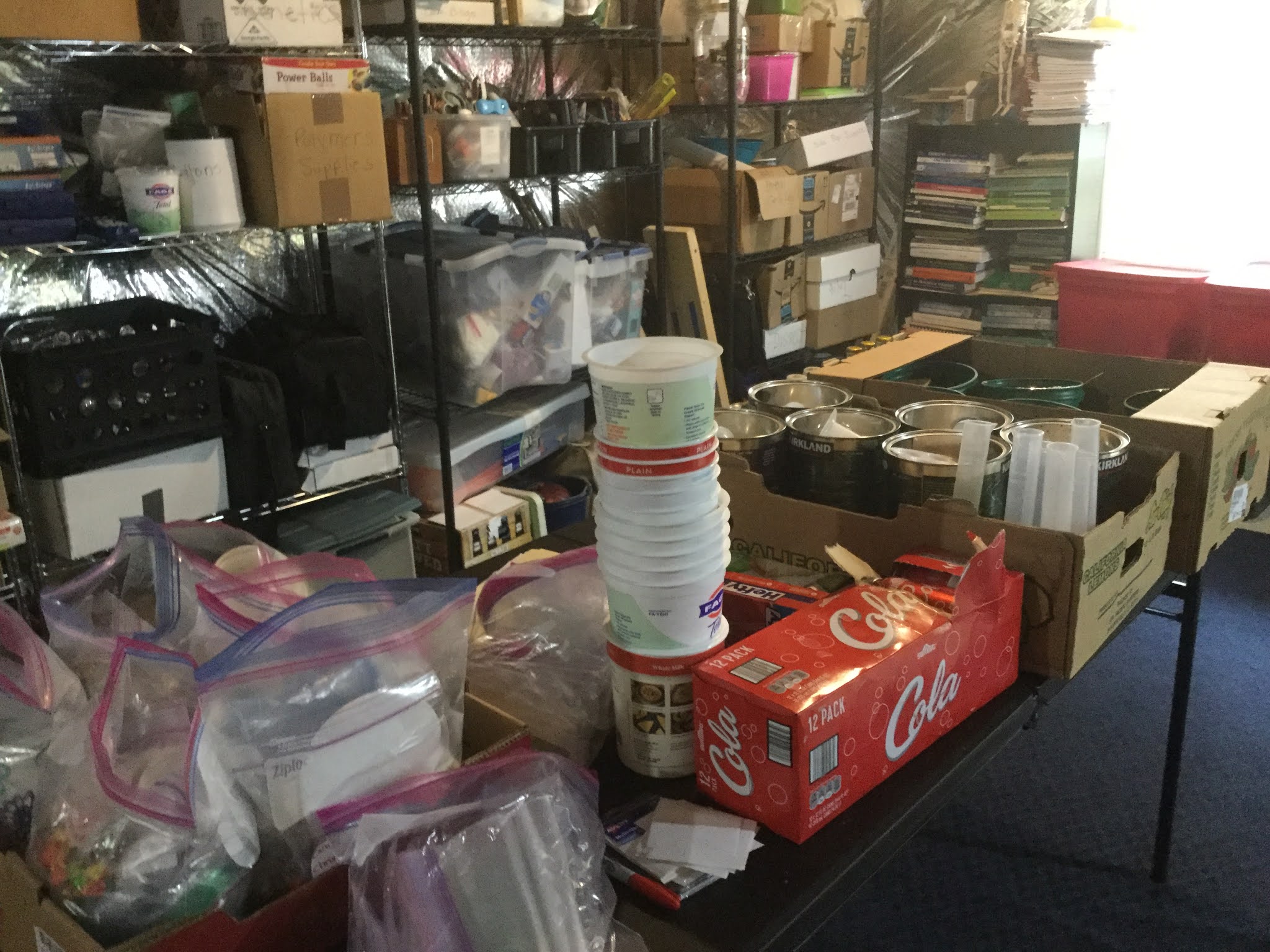
One important task is to set up your school space! Below is a tour of the basement classroom. I teach Co-op science classes in addition to other home-school classes. But look below. Basics include a white board, table and chairs, caddies for supplies (calculators, pens, rulers, and markers), shelves, bins, and a copier. Practical supplies include a clock, trash can, extra tables, and book cases for all of the textbooks and binders. Since I teach science, there are loads of supplies. I mark boxes in large letters. Stock up on paper, sharpies, etc. Your needs will differ. I have taught science a long time and have acquired tons of supplies. But, I think you will get a few ideas.




Friday, August 7, 2020
Math Manipulatives
Good Will online has a new listing for Math Modeling Sets—basically math manipulatives. These are usually expensive. Take a look!